Prerequisite: Candlesticks in context
On a small screen, scroll the figure sideways or open it full size.
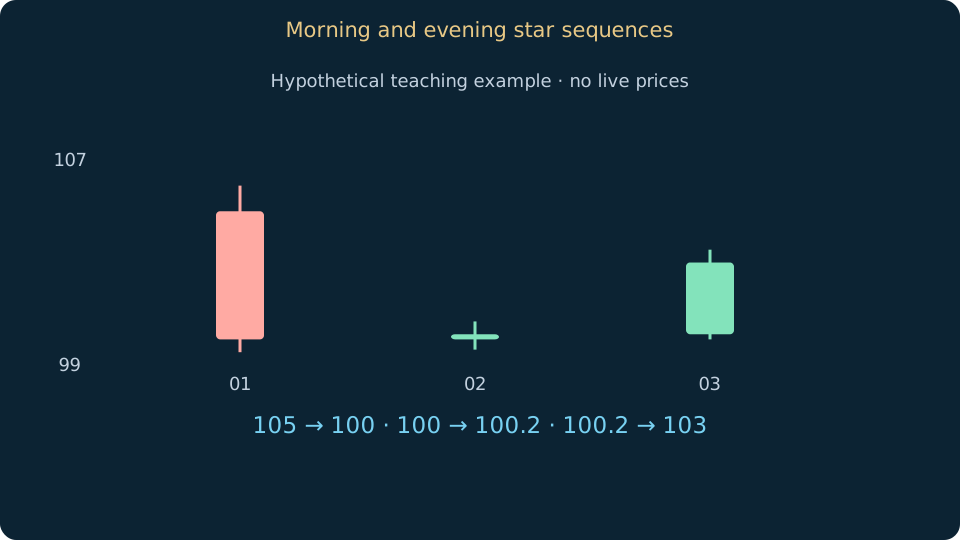
Read the figure
These are open-to-close bodies in a gap-free adaptation. The third close 103 exceeds the first-body midpoint 102.5. Wicks are illustrative.
Learning objective
Describe a three-candle reversal hypothesis and its failure condition.
A morning star combines a decline, a small-bodied pause and a stronger upward candle. An evening star reverses that sequence. The location matters: three candles in the middle of a range may describe noise rather than a meaningful change.
Continuous FX trading often lacks the gaps shown in textbook equity examples. State whether a gap is required, how small the middle body must be, and how far the final close must enter the first body. Different definitions produce different samples.
Wait for the third candle to close before classifying a completed sequence. Define the reference low or high and a separate entry rule. A pattern name alone gives neither a stop distance nor an expected win rate.
Worked example
Hypothetical candle bodies, written as open→close: 105→100, then 100→100.2, then 100.2→103. After a prior decline, these fit a gap-free FX adaptation of a morning-star candidate: a large down body, a small body and an up close beyond the first body's midpoint of 102.5. A strict definition requiring gaps would reject this example. Highs and lows are not supplied here, so a reference low must be defined separately; a later break below it can invalidate the hypothesis.
Common mistakes
Do not classify an unfinished candle or silently remove failed examples.
Practice
Collect ten candidates using one written definition; mark the context and every failure.
Sources & further reading
Saved on this device. Export a backup before clearing browser data or changing device.
My learning pathEditorial review: 15 October 2026 · AI-assisted technical review; independent specialist review pending.
Translation available · editorial review pending