Prerequisite: Backtesting without hindsight shortcuts
On a small screen, scroll the figure sideways or open it full size.
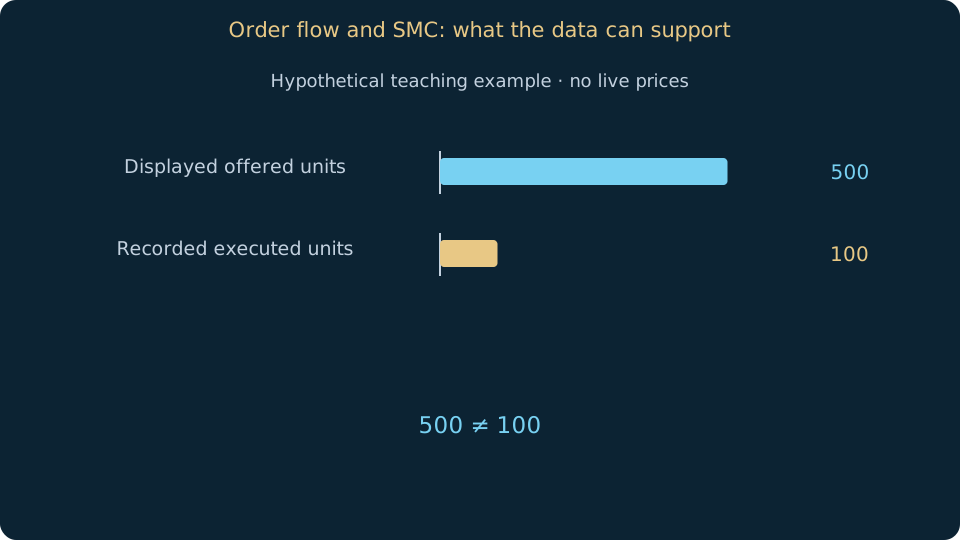
Read the figure
Only 100 units are recorded as traded. The disappearance of the remaining quote does not prove execution or identify intent.
Learning objective
Distinguish recorded transactions from chart interpretations of hidden intentions.
Order-flow tools may display executed volume, bid-ask activity or displayed order-book depth for a particular venue. Their coverage matters: exchange futures data describe that exchange, while OTC forex has no single consolidated global order book. Retail tick volume is not automatically total traded currency volume.
Displayed orders can be cancelled and some liquidity is hidden. A footprint’s aggressive-side classification depends on the feed and method. Neither a large displayed order nor a price reversal proves the identity or intention of an institution. Describe observations without inventing information the data do not contain.
Smart Money Concepts labels such as order blocks, liquidity sweeps and fair-value gaps are interpretive frameworks, not universally standardised proof of institutional activity. Define each pattern mechanically and test it prospectively with costs. A chart gap does not create an obligation for future prices to return to it.
Worked example
Hypothetically, a venue shows 500 units offered at a price, then only 100 trade before the remaining quote disappears. The data support 100 recorded traded units and a changed displayed quote; they do not prove that all 500 traded or identify who withdrew the order.
Common mistakes
Do not claim every wick is a deliberate stop hunt. Avoid future-aware pattern marking and compare rules against a simple baseline.
Practice
Define one sweep with exact price, time and confirmation rules. Blind-label 20 historical examples, including failures, then list what the feed cannot reveal.
Sources & further reading
Saved on this device. Export a backup before clearing browser data or changing device.
My learning pathEditorial review: 15 October 2026 · AI-assisted technical review; independent specialist review pending.
Translation available · editorial review pending