Prerequisite: A repeatable multi-timeframe process
On a small screen, scroll the figure sideways or open it full size.
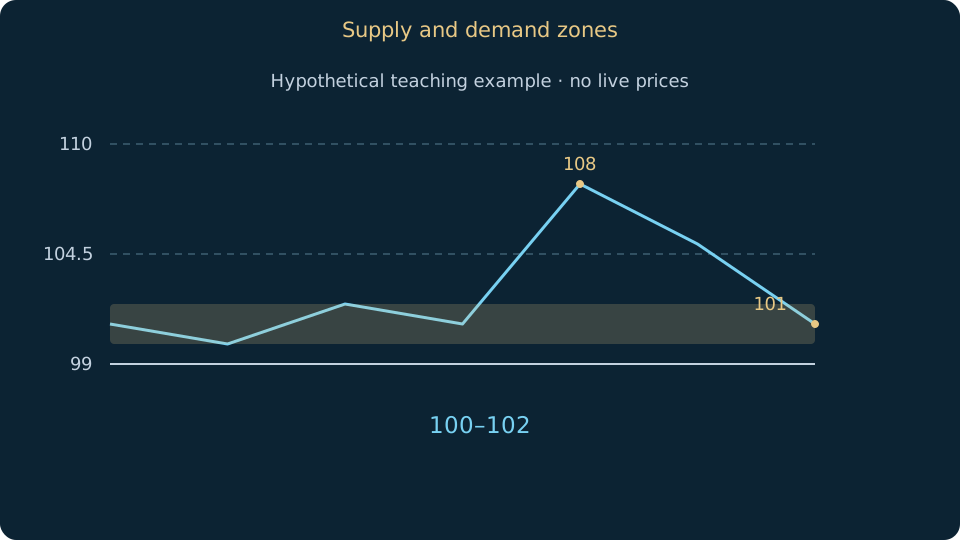
Read the figure
The base zone becomes a study hypothesis only after the qualifying rise. The return to 101 tests it.
Learning objective
Describe historical departure areas without claiming visibility of hidden orders.
A chart-based demand zone is commonly marked around a pause before a strong upward departure; a supply zone around a pause before a downward departure. These labels describe a price-based hypothesis about future reactions. A retail candle chart does not directly show all resting orders or identify which institution traded.
Write a zone construction rule: which base candles, whether bodies or full ranges define boundaries, and minimum departure size relative to recent volatility. The zone only becomes known after the departure satisfies the rule. Marking it before that information exists introduces look-ahead into testing.
Freshness, repeated visits and rapid departures are often discussed as qualifiers, but none proves an edge. Study them as separate variables rather than assuming unfilled orders remain. A stop beyond a zone can still suffer gaps; zone width must be converted into position size and cash risk.
Worked example
Illustration: base candles span 100–102, followed by rise to 108. A rule using full base range marks demand 100–102 only after the rise qualifies. A later visit to 101 is a test of that hypothesis, not proof that hidden buyers must act.
Common mistakes
Do not describe every fast move as institutional activity. Changing from bodies to wicks after a failure hides the original definition.
Practice
Define one base-and-departure rule and mark ten historical zones with their creation times. Classify later touches as reactions or failures using a fixed criterion; retain both groups.
Sources & further reading
Saved on this device. Export a backup before clearing browser data or changing device.
My learning pathEditorial review: 15 October 2026 · AI-assisted technical review; independent specialist review pending.
Translation available · editorial review pending