Prerequisite: Spot, CFDs and futures are different contracts
On a small screen, scroll the figure sideways or open it full size.
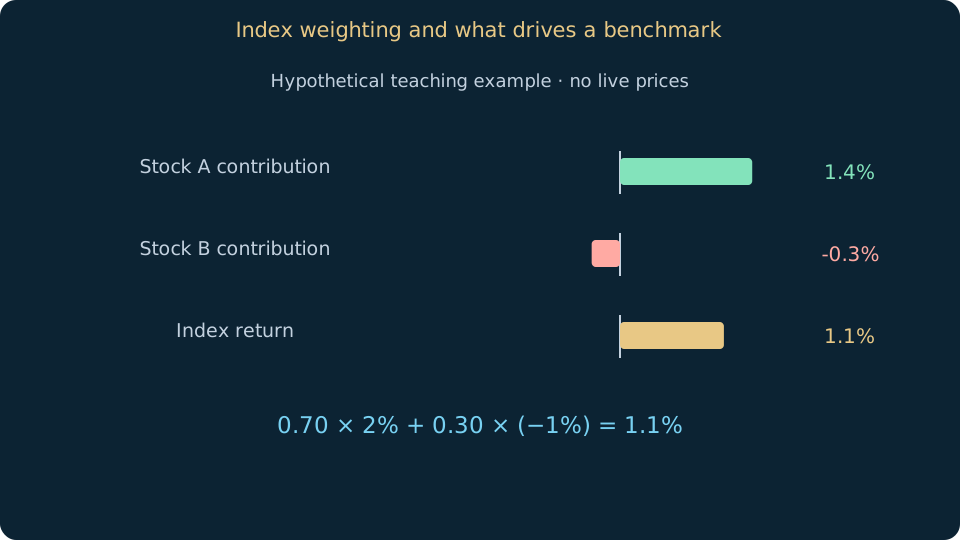
Read the figure
Starting weights are 70% and 30%. Distributions, rebalancing and corporate actions are excluded from this simplified example.
Learning objective
Calculate weighted contributions and distinguish an index from a tradable product.
An index is a calculated benchmark governed by a methodology, not an asset you directly own. A fund, futures contract or CFD referencing it has separate fees, tracking behaviour and legal terms. Check whether displayed performance is price return or includes distributions such as dividends.
Capitalisation weighting gives larger eligible market values greater influence; free-float adjustments can exclude unavailable shares. Price weighting assigns influence based on share prices, while equal weighting starts with equal weights at rebalance. Corporate actions and divisor adjustments require the index provider’s actual methodology.
An index can rise while most constituents fall if a few heavily weighted names gain enough. Examine concentration, sector exposure and contribution rather than assuming the headline describes every company. Weights change with prices and rebalancing, so old constituent tables may no longer represent current exposure.
Worked example
In a simplified hypothetical two-stock index, stock A weighs 70% and rises 2%; stock B weighs 30% and falls 1%. Approximate return is 0.70×2% + 0.30×(−1%) = 1.1%, assuming starting weights and no distributions or corporate actions.
Common mistakes
Do not confuse index points with percentage returns or assume every product labelled with the benchmark has identical financing and tracking.
Practice
Choose an official index methodology. Identify weighting, rebalance frequency and return type, then calculate a hypothetical three-constituent daily contribution table.
Sources & further reading
Saved on this device. Export a backup before clearing browser data or changing device.
My learning pathEditorial review: 15 October 2026 · AI-assisted technical review; independent specialist review pending.
Translation available · editorial review pending