Prerequisite: Backtesting without hindsight shortcuts
On a small screen, scroll the figure sideways or open it full size.
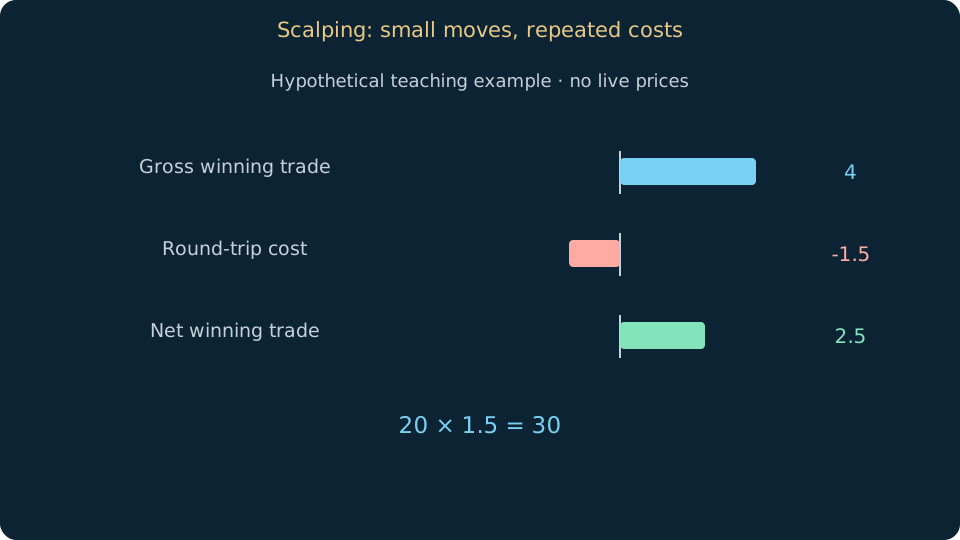
Read the figure
Twenty such wins incur 30 units of costs; losses are excluded here, so no total profitability is established.
Learning objective
Calculate the effect of repeated execution costs before judging a short-horizon method.
Scalping targets short holding periods and comparatively small price moves. It requires a fully specified entry and exit process, not simply a fast chart. Frequency increases the importance of execution quality, attention and aggregate exposure; a large number of trades is not itself an edge.
Model the complete round trip: spread, commission, expected slippage and any applicable conversion or funding. Costs must match the legal entity and product, and quote availability is not execution certainty. A limit-order simulation also needs a realistic fill rule instead of assuming every chart touch fills.
Evaluate gross and net outcomes separately. A small change in spread can consume much of a short target. Record missed trades, adverse fills, interruptions and maximum session loss rather than only attractive entries. A demo can test workflow, but cannot establish that real execution will match it.
Worked example
Hypothetical gross gain is 4 cash units per winning trade and a full round-trip cost is 1.5. Net gain is 2.5. Across 20 such wins costs total 30; losses and additional slippage are still excluded, so this is arithmetic, not a profitability forecast.
Common mistakes
Do not double-count spread when the simulated entry and exit already use bid and ask. Do not infer profit from a high win rate alone; average loss and all costs matter.
Practice
Construct five invented trades with gross gains and losses. Deduct a stated round-trip cost from each and repeat after doubling the cost to test sensitivity.
Sources & further reading
Saved on this device. Export a backup before clearing browser data or changing device.
My learning pathEditorial review: 15 October 2026 · AI-assisted technical review; independent specialist review pending.
Translation available · editorial review pending