Prerequisite: Reading a currency pair
On a small screen, scroll the figure sideways or open it full size.
Read the figure
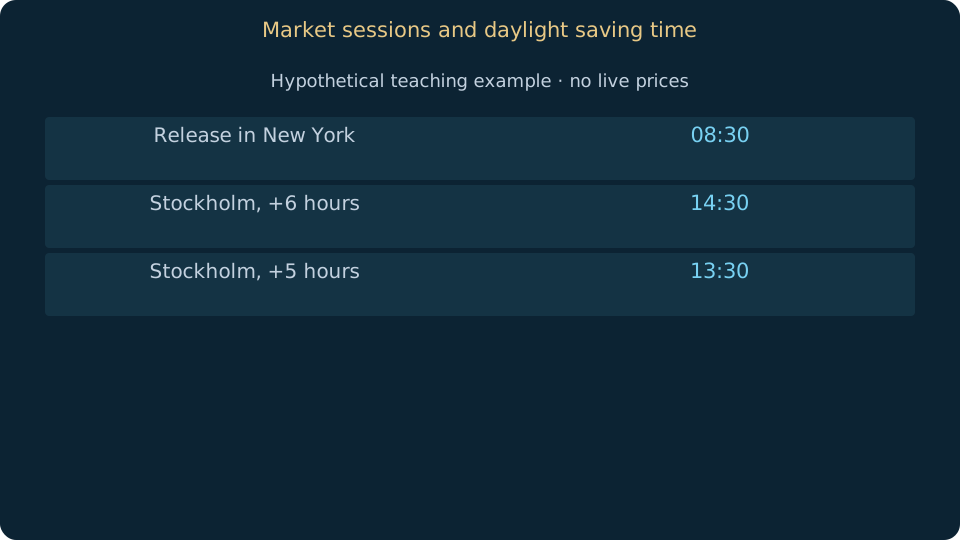
The event date and named timezones determine the offset. These are conversion examples rather than today’s schedule.
Learning objective
Convert a dated session time without assuming a year-round offset.
Forex centres pass activity across Asia, Europe and North America. Session labels describe local business activity rather than one universal exchange timetable. OTC forex, exchange futures and broker CFDs can have different breaks, holidays and opening rules even for similar underlying exposure.
Daylight saving rules differ by location and transition date. Europe and the United States do not always switch during the same week. Use named timezone identifiers such as America/New_York and Europe/Stockholm with the actual date; a fixed UTC offset is not sufficient for a recurring schedule.
Overlapping business hours can increase activity but do not guarantee narrow spreads or orderly execution. Data releases, holidays and rollover may outweigh normal patterns. Check the instrument’s official hours and server time separately, and remember that candle boundaries can vary between chart providers.
Worked example
For a hypothetical 08:30 New York release, a six-hour Stockholm difference gives 14:30; a five-hour difference gives 13:30. These are conversion examples, not a claim about today’s offset. The date determines which offset applies.
Common mistakes
Do not copy an old screenshot of session hours or treat a broker’s server clock as your local timezone.
Practice
Convert the same New York time on three dates around a clock change. Record UTC, Stockholm and provider server times.
Sources & further reading
Saved on this device. Export a backup before clearing browser data or changing device.
My learning pathEditorial review: 15 October 2026 · AI-assisted technical review; independent specialist review pending.
Translation available · editorial review pending